Police-Impounded Pickup Trucks: Rules, Fees, and Recovery Options
Getting a pickup truck back from a police impound lot can feel like stepping into a maze of paperwork, deadlines, and rising costs. For drivers, contractors, and small business owners, the truck is often more than transportation; it is a work tool, a hauling partner, and sometimes the anchor of an entire schedule. This guide explains how impound rules usually work, what fees commonly appear, and which recovery options may save time or money. Read on before storage charges turn a bad day into an expensive week.
Article Outline
This article is organized to answer the questions most people have after a pickup truck is impounded.
- Why pickup trucks are impounded and how the process usually begins
- What documents and conditions are needed for release
- Which fees add up fastest and how costs are commonly calculated
- What recovery options exist when the bill or the hold becomes difficult
- What happens if the truck is never claimed, and what owners should do next
Why Pickup Trucks Get Impounded and How the Process Usually Starts
A police impound does not always begin with dramatic flashing lights, but it almost always begins with a legal trigger. In many jurisdictions, a pickup truck can be impounded after an arrest, after a stop involving a suspended license, because of unpaid tickets, after being found abandoned, or because it was parked in a way that created a safety problem. Some trucks are held after a crash investigation, especially if police need to preserve the vehicle as evidence. Others end up in impound through local nuisance or code enforcement rules. The reason matters because the reason often determines how long the truck stays put and what must happen before it can be released.
Pickup trucks present a few complications that ordinary passenger cars do not. A work truck may contain expensive tools, ladders, job materials, or attached equipment. A lifted pickup or a truck with oversized tires may require specialized towing. A truck connected to a trailer can trigger separate storage or release questions. If the vehicle is registered to a company rather than an individual, the release process may involve additional authorization. In plain terms, the moment the truck passes through the impound gate, the situation can become part traffic law, part property law, and part logistics puzzle.
Common reasons for police impound include:
- Driving without a valid license or with a suspended license
- Lack of insurance or expired registration
- Parking violations, obstruction, or abandonment claims
- Arrest of the driver with no authorized person available to take the truck
- Evidence holds after serious collisions or criminal investigations
Even when the truck was not moving, it may still be towed and impounded. Cities often remove vehicles from fire lanes, private lots, disabled access areas, tow-away zones, or streets posted for emergency work. Some municipalities also impound vehicles that rack up multiple unpaid citations. The frustrating part for owners is that the legal basis may seem minor compared with the practical effect. A contractor can lose a day of work over a registration problem. A landscaper can be cut off from equipment sitting in the bed. A family that uses one pickup for work and errands suddenly has neither.
The first step is always to confirm where the truck went and why. Contact the local police department, sheriff, or municipal impound office and ask for the tow report, the hold status, and the release conditions. That call sets the tone for everything that follows. If there is no active police hold, the process may move quickly. If there is a thirty-day hold, an evidence hold, or a court-related restriction, recovery becomes more complicated. Understanding the exact reason for impound is the difference between a short administrative errand and a long, expensive waiting period.
Documents, Ownership Questions, and the Release Process Step by Step
Once you know where the pickup is stored, the next challenge is proving that you have the right to retrieve it. This is where many owners lose time. An impound yard or police release desk typically asks for a specific set of documents, and missing even one can stall the process by another day. That delay matters because storage fees often continue to run while the paperwork problem is being fixed. Think of the release process less like visiting a parking garage and more like clearing a legal checkpoint.
In many places, the registered owner must appear in person or send someone with formal written authorization. A standard release package may include a government-issued photo ID, proof of ownership or registration, proof of insurance, and a release form issued by the police department or court. If the truck was impounded because the driver was unlicensed, the lot may refuse to let that same person drive it away even after payment is made. In that case, a licensed and insured driver may need to pick it up, or the vehicle may need to leave on a flatbed or trailer.
Typical release requirements often include:
- Valid photo identification
- Vehicle registration or title information
- Proof of current insurance, when required by local law
- Police release, court release, or administrative clearance
- Payment for towing, storage, and related fees
- A licensed driver if the owner cannot legally operate the truck
Ownership questions become more layered when the truck is financed, leased, or owned by a business. If a pickup belongs to a company fleet, the employee who used it may not be able to retrieve it without a letter on company letterhead or a notarized authorization. If the truck has a lien, the lender may also have rights, especially when fees climb and the owner stops responding. Some impound yards will release the truck to a lienholder under state procedures. That is one reason financed vehicles can move into a separate track from personally owned vehicles.
Another issue is access to personal property inside the truck. Policies differ. Some impound lots allow owners to retrieve essential personal items before full vehicle release, while others restrict access until police authorize it. Tools, child seats, medication, business records, and phones may all be treated differently depending on local rules and whether the truck is on evidentiary hold. It is smart to ask exactly what can be removed and whether an appointment is needed.
The most efficient approach is to call ahead and request a written list of requirements. Ask about office hours, accepted payment methods, ID rules, and whether same-day release is possible. Plenty of owners show up prepared to pay but leave empty-handed because the police release window closed at noon, the lot takes cash only, or a missing insurance card blocks the final signature. A pickup truck can wait in a fenced yard without complaint. Your storage bill, however, keeps speaking.
Understanding Tow Charges, Daily Storage Fees, and the Real Cost of Waiting
The financial side of a police impound is where stress usually turns into urgency. Most owners expect a tow fee and maybe a small release charge. What catches people off guard is the stack of separate costs that can attach to a pickup truck within a few days. In many U.S. cities and counties, the bill may include the initial tow, a daily storage rate, an administrative fee, after-hours release fees, gate fees, and any unresolved citation or registration penalties that must be cleared first. A pickup truck can become expensive faster than a routine repair.
While exact numbers vary widely by state, city, and towing contractor, common civilian tow fees for light trucks often land somewhere around $150 to $400, with higher prices for heavier pickups, specialized equipment, or long-distance transport. Daily storage fees commonly range from roughly $25 to $100 or more, especially in dense urban areas or secured facilities. If a truck is oversized, attached to a trailer, or loaded in a way that required extra labor, the total may climb. Those ranges are not universal, but they help explain why a short delay matters.
Here is how a modest bill can grow:
- Initial police-ordered tow: $225
- Administrative release fee: $65
- Storage for 5 days at $50 per day: $250
- Total before tickets or registration issues: $540
Now consider a longer hold. A thirty-day impound at $55 per day would produce $1,650 in storage alone. Add the tow and administrative charges, and the bill can approach or exceed $1,900 before the owner deals with insurance lapses, court fines, or licensing problems. For older pickup trucks, that number can be painfully close to the vehicle’s market value. At that point, the owner is not simply deciding how to get the truck back. The owner is deciding whether the truck still makes financial sense.
Pickup trucks also come with indirect costs that do not appear on the invoice. Missing work because tools are locked in the bed can cost more than the tow itself. A contractor may have to rent another vehicle. A family might need ride-share trips or a short-term rental. If the truck hauls a trailer, boat, or business equipment, scheduling problems spread outward like ripples in a pond after a heavy stone drops in.
Before paying, ask for an itemized statement. Confirm whether storage is charged by calendar day, by twenty-four-hour period, or from a fixed daily cutoff time. Ask whether partial days count as full days. Find out if weekends and holidays are included. A few targeted questions can prevent confusion and reveal whether the total is accurate. The key lesson is simple: once a pickup truck reaches impound, time is no longer neutral. Time has a price tag, and that tag usually gets larger every morning.
Recovery Options When the Bill Is High, the Hold Is Long, or the Situation Feels Unfair
Not every impound ends with the owner walking in, paying the bill, and driving away. Sometimes the amount owed is too high, the legal hold is too long, or the tow itself may be questionable. In those situations, owners still have options, though the right one depends on the reason for impound and local law. The most useful starting point is to separate emotional frustration from the practical choices in front of you. You do not need to like the process to navigate it well.
One possible option is an administrative hearing or tow review. Many jurisdictions allow vehicle owners to contest whether the tow or impound was authorized. If the truck was taken from a place where it should not have been towed, or if the legal basis was weak, a hearing may reduce or reverse certain charges. Timing matters. These hearings often have short filing deadlines, sometimes only a few days. Missing the deadline can leave the owner with fewer ways to challenge the action later.
Other recovery paths may include:
- Requesting a tow hearing or administrative review
- Seeking an early release after proving valid insurance or corrected registration
- Using an innocent owner claim if someone else caused the impound
- Asking about hardship release, fee reduction, or payment plans where available
- Coordinating with a lienholder if the vehicle is financed
- Retrieving essential property from the truck even if full release is delayed
An innocent owner situation can arise when the registered owner was not the person driving at the time of the stop. For example, a family member may have used the pickup without permission, or an employee may have caused the violation in a company truck. Some states and local agencies recognize procedures that let an owner seek relief after showing lack of knowledge or lack of consent. These procedures are specific and often document-heavy, but they can matter enormously.
If the truck was stolen before it was impounded, report that fact immediately and ask how it affects storage and release. Some agencies or tow companies waive or reduce certain charges when the owner is a documented theft victim, though policies vary. If the truck is held as evidence, the owner should ask whether photographs, forensic processing, or other investigative steps have been completed and whether a partial release of property is possible.
There are also times when the hardest option is the most rational one: not reclaiming the vehicle. If the pickup is old, heavily damaged, or worth less than the combined fees, paying to recover it may not be wise. That is a financial decision, not a moral failure. Before making it, however, ask how the jurisdiction handles unclaimed vehicles, whether fees continue to attach, and whether the owner could still face collection action. A quick consultation with a local attorney, legal aid office, or consumer rights clinic can be worth far more than its cost when the numbers become painful.
If a Pickup Truck Is Never Claimed: Auctions, Consequences, and Final Advice for Owners
When a police-impounded pickup truck is not reclaimed, the case usually moves toward a lien process, a public sale, or an auction authorized by state or local law. The timeline varies, but agencies and tow operators often must send notice to the registered owner, lienholder, or both before selling the vehicle. If no one pays the charges or asserts the proper rights, the truck may be auctioned to recover towing and storage costs. This is one reason police-impounded pickups sometimes appear in public auction listings with prices that look surprisingly low. The low entry price, however, does not tell the whole story.
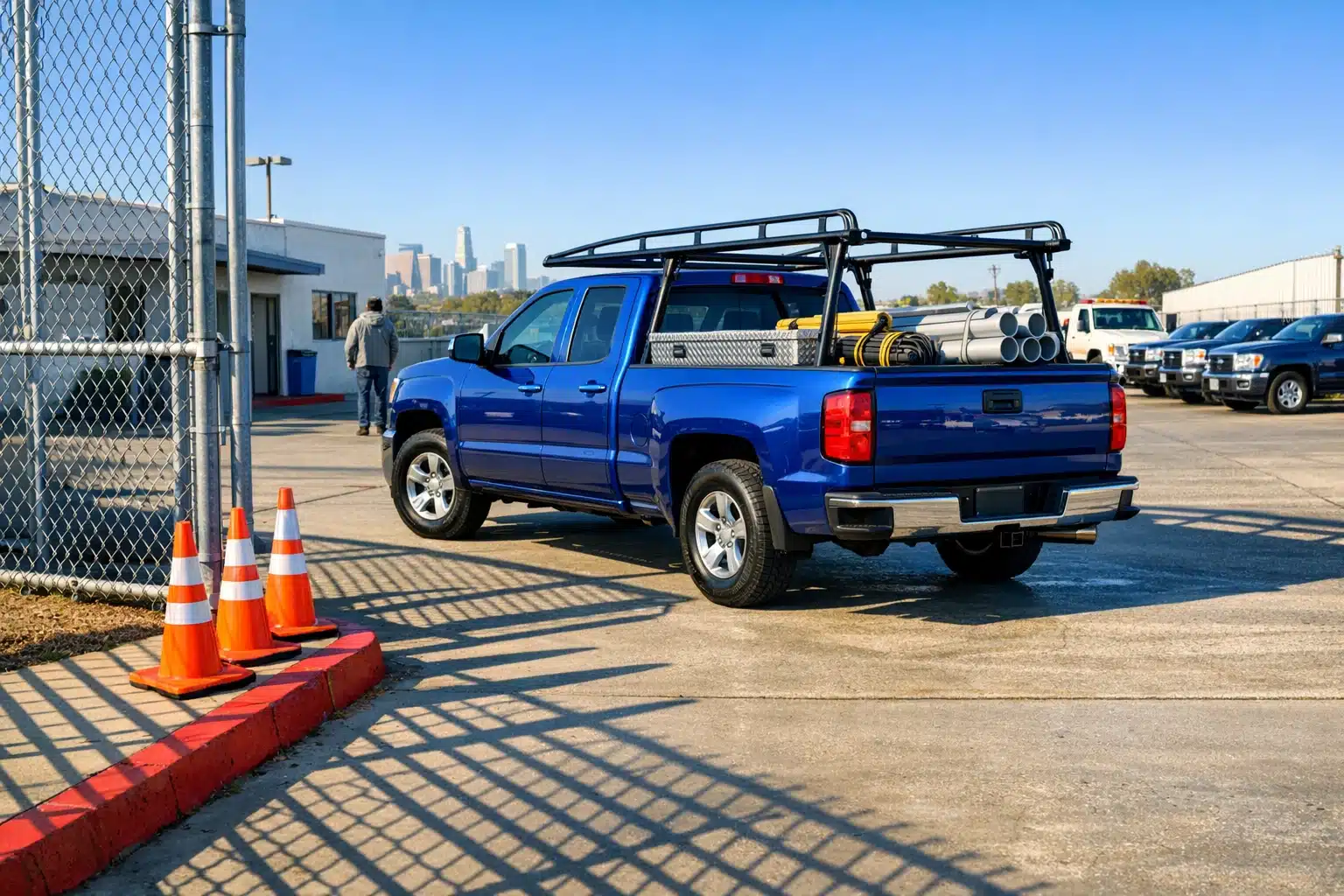
For buyers, impound auctions can offer opportunity, but they also carry real risk. Vehicles are often sold as-is, with limited history and no guarantee about mechanical condition. A pickup that sat in storage for weeks may need a battery, tires, fluids, or deeper repairs. A former work truck may have heavy wear hidden beneath a clean exterior. Sometimes keys are missing. Sometimes service records are nonexistent. The chain-link fence can make any truck look mysterious; the bill after purchase makes it look ordinary again.
Anyone considering an impound auction purchase should pay attention to basics:
- Read the auction terms carefully and confirm title status
- Check whether inspection is allowed before bidding
- Budget for transport if the truck cannot be driven legally
- Assume some repair or reconditioning cost after purchase
- Research comparable market value before treating the bid as a bargain
For current owners, the biggest lesson is speed and documentation. The earlier you verify the reason for impound, gather the required paperwork, and understand the fee structure, the better your chances of containing the damage. If your pickup supports your work, ask immediately about access to tools and business equipment. If the impound seems improper, do not wait passively while costs rise; ask about review procedures and deadlines. If the bill already exceeds the truck’s value, compare sentiment with economics and make a decision grounded in facts.
Conclusion for Pickup Owners, Work-Truck Drivers, and Practical Buyers
A police impound is never just about where the truck is parked now. It affects mobility, income, scheduling, and peace of mind, especially for people who rely on a pickup every day. The smartest response is fast, calm, and organized: confirm the reason for the tow, learn the release rules, calculate the total cost, and choose the recovery path that fits the truck’s real value. Whether you are trying to retrieve your own pickup or evaluating one at auction, the same principle applies: details matter more than assumptions. In the world of impounded trucks, paperwork, timing, and clear-headed math usually decide who comes out ahead.