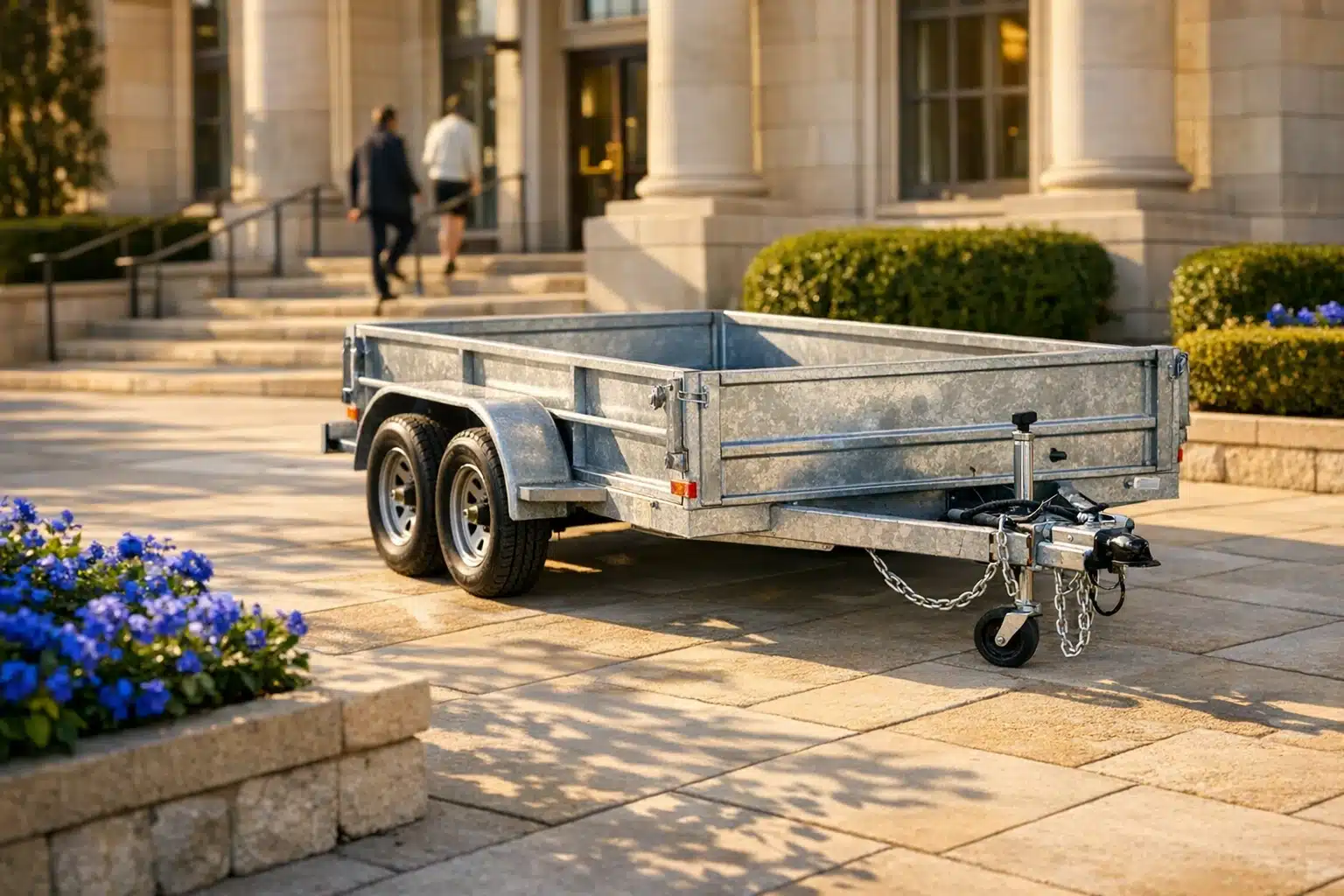
 Artificially generated image
 Police Impound Trailers: What Buyers Should Know
Police impound trailers attract buyers because they can sell below ordinary retail prices, yet the low sticker number rarely tells the full story. A trailer may come from an unpaid tow, an abandonment case, a registration lapse, or a law-enforcement seizure, and each path can affect paperwork, condition, and pickup rules. For contractors, hobby haulers, farmers, and bargain hunters, knowing those differences is what separates a practical purchase from an expensive recovery project.
1. Outline and Market Basics: How Police Impound Trailers End Up for Sale
Before diving into inspections, bidding tactics, and title issues, it helps to start with a clear map of the subject. This article follows a practical path: first, how impound trailers reach auction or disposal channels; second, how to evaluate a trailer before you bid; third, what legal paperwork matters most; fourth, the real cost beyond the hammer price; and fifth, how to decide whether this market actually suits your needs. Think of it as walking the yard before walking to the cashier.
Police impound trailers do not all arrive through the same doorway. Some are towed after traffic stops or parking violations. Others are abandoned on roadsides or private property and later transferred through local procedures. Some are seized during investigations, though that does not automatically mean they are linked to dramatic criminal stories. In many cases, they are simply unclaimed units sitting in storage lots while fees continue to pile up. Once statutory notice periods pass and ownership is not redeemed, the trailer may be auctioned, transferred, or sold through a contracted auction platform.
That origin matters because it shapes risk. A trailer that was abandoned may have weather damage and missing documents. A trailer towed from a registration issue may be mechanically serviceable but tangled in paperwork. A seized commercial trailer may have heavy wear from actual work, not showroom life. Buyers often imagine a hidden gem under a layer of dust, and that does happen now and then, but a more realistic image is a useful asset that needs patient checking.
- Impound trailers can include utility trailers, enclosed cargo trailers, boat trailers, flatbeds, car haulers, livestock trailers, and small campers.
- Sales may be run by police departments, sheriffs, municipal tow contractors, county surplus offices, or third-party auction companies.
- Terms are commonly strict: sold as is, where is, with limited inspection time and short pickup windows.
The market appeals to several kinds of buyers. Small business owners may look for a work trailer at a lower upfront cost. Rural buyers may want a basic hauler they can repair themselves. Resellers may search for units with clean frames and manageable defects. But the same feature that creates opportunity also creates uncertainty: information is thin. Unlike a dealer lot, an impound auction rarely gives you a polished walkaround, service history, or a friendly salesperson eager to answer every question. You are expected to do your own homework, make peace with incomplete details, and stay disciplined when a crowded auction starts to feel like a contest.
2. Inspecting Before You Bid: Condition, VIN, and Signs of Hidden Trouble
If there is one stage where buyers save the most money, it is the inspection stage. An impound trailer may look rough and still be structurally solid, or it may look acceptable from ten feet away and turn into a steel box of problems once you notice frame cracks, axle damage, missing lights, or a tampered identification plate. Because most auctions sell trailers without warranties, your pre-bid inspection is not a formality. It is your best defense against optimism.
Start with the frame. Rust is common, but not all rust means the same thing. Surface corrosion on older steel trailers is ordinary. Deep scaling, separation at welds, thin crossmembers, bent rails, and poor repair patches are more serious. Look underneath, not just around. If the trailer appears to sag, lean, or sit unevenly, suspension or axle issues may be waiting. A flashlight, gloves, and a willingness to kneel on dirty pavement are often worth more than a glossy auction listing.
Then check the running gear. Tires reveal more than wear; they reveal neglect. Cracked sidewalls, uneven tread, mismatched sizes, or obviously old date codes suggest the trailer has sat for a long time or has been poorly maintained. Wheel bearings are another common problem area. You may not be able to disassemble anything on site, but you can look for grease leakage, wobble, or signs of heat damage around hubs. With boat trailers, pay special attention to corrosion around brakes, bunks, rollers, and wiring.
- Verify the VIN or serial plate and compare it to the auction description.
- Check coupler size, safety chains, jack condition, and breakaway components if equipped.
- Look for cut wiring, missing lights, broken ramps, rotten flooring, water intrusion, or damaged roof seams on enclosed trailers.
- Ask whether keys, spare tires, registration papers, or title documents are included.
One of the biggest mistakes buyers make is focusing only on what can be repaired and ignoring what cannot be easily regularized. A trailer with bad boards and worn tires is annoying. A trailer with missing identity information, a questionable VIN plate, or signs of major frame alteration is a completely different proposition. Even if the auction house legally sells it, you may still face difficulty when registering it, insuring it, or proving ownership later.
Compare the trailer against local market prices before auction day. If a similar used unit sells privately for a modest premium over your likely total cost, the safer private-market purchase may be the smarter choice. Impound inventory rewards buyers who can evaluate condition calmly, estimate repairs honestly, and walk away without regret when the numbers stop making sense.
3. Titles, Release Forms, Liens, and Registration: The Legal Side Buyers Cannot Ignore
For many first-time buyers, the mechanical side feels easier than the paperwork. You can see a broken taillight. You can price tires. Paper issues are slipperier. They appear small at first and then suddenly block registration, resale, or even legal road use. That is why the legal side deserves the same attention as the frame and axle.
The first question is simple: what ownership document will you actually receive? Depending on the state, agency, and trailer type, the answer may be a clear title, a bill of sale, a certificate of sale, a lien release, a salvage document, or an application packet requiring further steps. Rules vary widely. Some lightweight trailers may not have titles in certain jurisdictions, while larger or commercial trailers often do. If you assume the paperwork will sort itself out later, you are taking a gamble with poor odds.
Ask these questions before bidding whenever possible. Does the seller provide a title, or only a bill of sale? Is there an outstanding lien that has been legally resolved? Will the DMV require a VIN inspection before registration? Is the trailer recorded as homemade, reconstructed, salvage, or prior abandoned property? Are there unpaid storage charges, towing fees, or administrative costs due from the winning bidder at pickup? Auction terms often answer some of this, but not always in plain language.
There is also an important distinction between a trailer being lawfully sold and a trailer being easy to register. An agency may follow legal notice procedures and still transfer a unit with limited documentation. That does not mean your local motor vehicle office will treat the registration process as routine. In some areas, buyers may need additional inspections, notarized forms, weight slips, or proof that the VIN is intact and untampered with.
- Read the auction terms line by line, especially sections covering title status, buyer responsibility, and removal deadlines.
- Call your local DMV or equivalent agency before bidding on higher-value units.
- Save copies of the auction listing, invoice, receipt, bill of sale, and every release form.
- Do not tow the trailer on public roads until it meets legal equipment and registration requirements in your area.
Another practical issue is timing. Some buyers win a trailer on Friday and assume they can register it immediately. In reality, title mailing, lien releases, or administrative processing may take days or weeks. During that gap, you still need a lawful plan for storage and transport. If you buy for business use, this delay can disrupt work schedules.
The smartest buyers treat documentation like part of the product itself. A trailer without usable paperwork is not merely incomplete; it may be commercially less valuable than a more expensive unit with clean, transferable documents. In this market, paper can weigh as much as steel.
4. The True Cost of Ownership: Fees, Repairs, Transport, and Insurance
The winning bid is only the opening number. Many buyers discover this too late, after an apparently cheap trailer becomes a stack of separate invoices. Police impound sales are full of hidden arithmetic. The trailer itself might be affordable, but the path from auction yard to road-ready equipment can include buyer premiums, taxes, storage charges, towing costs, replacement parts, inspections, and time. Time deserves to be counted because it has a cost even when no one prints it on the receipt.
Start with auction charges. Third-party auction sites may add a buyer premium on top of the hammer price. Public agencies may charge administrative fees or document fees. Some lots impose strict pickup windows, and missing that deadline can trigger daily storage costs. If the trailer does not roll safely, you may need a flatbed or heavy tow instead of a simple hitch-and-go pickup. Buyers who live far from the sale location often underestimate transport the most.
Repairs vary by trailer type. A utility trailer may need only lights, tires, and deck boards. An enclosed trailer can hide roof leaks, rotten flooring, door hardware failure, corrosion under wall panels, or electrical problems. Boat trailers bring their own personality: bunks, rollers, brakes, hubs, and corrosion exposure can turn a low bid into a substantial refurbishment. Livestock and commercial trailers may involve flooring, gates, partitions, or brake system work that is safety-critical rather than cosmetic.
- Common immediate expenses include tires, wheels, bearings, lights, wiring, coupler parts, safety chains, jacks, and registration fees.
- Common medium-term expenses include brake service, axle replacement, floor rebuilds, rust treatment, and repainting.
- Overlooked expenses include transport permits, locksmith work, missing key replacement, and labor if you cannot do repairs yourself.
Insurance is another area where buyers assume simplicity and find nuance instead. Some insurers make trailer coverage straightforward, especially for common utility units with clean VIN records. Others may request photographs, title copies, declared values, or proof of intended use. Business use can require different coverage than personal hauling. A salvage or reconstructed status may also affect underwriting or payout assumptions.
The best budgeting method is to calculate a ceiling price before you bid. Estimate market value for a comparable roadworthy trailer, then subtract expected repairs, fees, transport, a contingency amount, and the value of your own labor. If your maximum bid ends up much lower than you hoped, that is not bad news. It is honest math. An impound purchase works best when the buyer leaves room for surprises, because surprises are not rare visitors here. They are frequent residents.
5. Smart Bidding, Buyer Profiles, and Final Takeaways for People Considering an Impound Trailer
Not every shopper should buy from a police impound sale, and that is perfectly fine. This market favors certain temperaments and punishes others. If you need a trailer immediately for dependable daily use, have no repair skills, dislike paperwork, and cannot tolerate uncertainty, a reputable dealer or a transparent private seller may be the better route. On the other hand, if you are patient, organized, mechanically aware, and disciplined with numbers, impound inventory can offer real value.
The key word is disciplined. Auctions are emotional environments. A trailer that looked like a bargain at 8 a.m. can become overpriced by 8:07 because several bidders decide they want to win more than they want a good deal. Set your maximum bid in advance and write it down. If bidding rises above your ceiling, let it go. Another trailer will appear. Chasing the crowd is how a budget buy turns into a regret with lug nuts.
It also helps to match the trailer to your skill set. A buyer who welds, rewires lights, and services bearings can responsibly consider rougher units. A buyer who must outsource every repair should target cleaner inventory with better paperwork and a shorter path to registration. Commercial buyers should be even stricter because downtime affects revenue. Saving money upfront does not help if the trailer misses jobs while waiting for documents or repairs.
- Good candidates for impound purchases: experienced DIY owners, resellers who know title procedures, small operators with flexible timelines, and buyers seeking basic utility trailers.
- Poor candidates: buyers needing immediate turnkey reliability, first-time owners uncomfortable with inspections, and anyone who has not checked local registration rules.
- Best habit of all: treat every listing as a possibility, not a promise.
There is also a strategic benefit in specializing. Some buyers learn one niche, such as enclosed cargo trailers or small equipment haulers, and become much better at spotting value. Familiarity sharpens judgment. You notice frame layouts, common failure points, replacement part costs, and fair resale ranges faster than a generalist bidder who is scanning everything at once.
Conclusion for Prospective Buyers
Police impound trailers can be worthwhile purchases, but they reward preparation far more than impulse. The right buyer checks the VIN, studies the terms, confirms the documents, prices repairs, and calculates transport before bidding ever begins. If you approach the process with clear limits and practical expectations, an impound trailer can become a useful asset rather than a lesson wrapped in rust. For buyers who want savings without unnecessary headaches, caution is not a mood here; it is the strategy that makes the whole deal work.