Police Impound Pickup Trucks: What Owners Need to Know
Few vehicle problems feel as abrupt as stepping outside and finding the spot where your pickup was parked suddenly empty. A police impound can start with something small, like expired registration, or something more serious, such as an arrest, unpaid tickets, or an evidence hold after a crash. From that moment, time matters because towing bills, storage charges, and legal notices can pile up faster than most drivers expect. Knowing how the system works can turn a stressful surprise into a manageable checklist.
Outline: The Main Questions Every Pickup Owner Should Answer First
Before diving into procedures, it helps to see the topic as a chain of connected decisions rather than one single event. Police impound pickup trucks for legal, safety, or administrative reasons, but the owner’s experience is shaped by what happens in the hours and days afterward. That is why this article begins with a practical outline. If you understand the order of events, the paperwork stops looking like a pile of unrelated forms and starts acting more like a roadmap.
This guide is organized around five core questions:
• Why was the pickup impounded in the first place?
• What happens after the tow truck leaves with it?
• Which fees, documents, and deadlines control release?
• When does an impounded truck end up at auction?
• What should owners and buyers do to protect themselves?
Each question matters because pickup trucks are not always treated exactly like smaller passenger cars. A lifted truck, a commercial-use pickup, or a heavy-duty model may cost more to tow and store. A truck carrying tools, construction materials, or personal equipment may also create added inventory disputes if property inside the cab or bed must be documented before release. In some cases, police do not hold the vehicle for long at all; in others, the truck may sit behind chain-link fencing while the owner sorts out court dates, registration problems, proof of ownership, or insurance issues.
Another important point is jurisdiction. Impound rules can differ by city, county, and state. One department may release a vehicle once a valid license and registration are shown. Another may require a court release, proof of insurance, payment of all towing and storage fees, and a signed authorization from the registered owner or lienholder. Because of that variation, no article can replace direct confirmation from the tow yard, police agency, court, or motor vehicle office. What a good article can do is prepare you to ask the right questions quickly.
Think of impound like a countdown clock in a noisy room. The information is there, but it is easy to miss if you do not know where to look. The sections that follow explain the common reasons for impound, the legal and logistical steps that follow, the money involved, and the risks and opportunities that appear when a pickup is eventually sold. Whether you are trying to recover your own truck or considering an auction purchase, the smartest move is always the same: get informed before the fees or the timeline outrun you.
Why Police Impound Pickup Trucks in the First Place
Police do not impound pickup trucks for one universal reason. Instead, impound usually happens when a vehicle must be removed from a public place, held for legal review, or kept until an ownership or compliance issue is resolved. For truck owners, the distinction matters because the reason for impound often determines how long the truck stays in storage and what must happen before it can be released.
Some of the most common reasons are straightforward. A pickup may be towed after a traffic stop if the driver is arrested, does not have a valid license, or has no insurance where proof is legally required. It may also be impounded if it is parked illegally, abandoned on a road shoulder, blocking traffic, or creating a hazard after a breakdown or collision. Cities and counties also impound trucks tied to repeated parking violations, unpaid citations, registration lapses, or local code enforcement issues. In other situations, police hold the vehicle as evidence after a crash, suspected crime, or investigation. That kind of hold can be especially frustrating because the owner may be ready to pay the fees, yet release still depends on law enforcement approval.
Pickup trucks add a few practical wrinkles. Compared with standard sedans, they may:
• weigh more and require specialized towing equipment
• carry attached trailers, toolboxes, ladder racks, or aftermarket parts
• be registered to a business instead of an individual
• contain work gear that owners urgently need even when the vehicle itself cannot yet be released
There is also a common misunderstanding worth clearing up: impound is not always a judgment about the truck’s condition. Sometimes it is simply the result of circumstances. Imagine a driver arrested during a late-night stop while the pickup is left on a narrow street, or a truck involved in a crash that must be secured while investigators document the scene. In these cases, police are often responding to safety and procedure, not making a statement about the owner’s intentions.
That said, some issues raise the risk of impound more than others. Chronic registration neglect, suspended licenses, and repeated unpaid tickets can turn a routine encounter into a tow. Owners of modified trucks should also know that local equipment laws matter. Excessive tint, missing plates, illegal lighting, or unsafe modifications may not always cause impound on their own, but they can complicate an already bad stop. The lesson is simple: a police impound usually begins at the intersection of law, safety, and logistics, and pickup owners should understand all three before trouble starts.
What Happens After the Tow: Storage, Holds, Notice, and Release Rules
Once a pickup truck has been impounded, the next stage can feel oddly mechanical. The truck is towed, logged, stored, and placed somewhere between administrative routine and legal limbo. For the owner, however, this is when the case becomes personal. The tow yard is rarely dramatic, yet it has a way of turning ordinary paperwork into expensive urgency. Every hour the truck sits behind the gate can matter.
After towing, the vehicle is typically inventoried and entered into a storage record. The towing company, police agency, or contracted impound facility will note identifying details such as the plate number, vehicle identification number, condition, and sometimes visible property inside. If the truck was involved in a crash or suspected crime, it may also be photographed or held for further examination. Owners often want immediate access, but release depends on the type of hold in place.
Broadly, impound holds tend to fall into a few categories:
• administrative holds, such as license, registration, or insurance problems
• evidentiary holds linked to an investigation
• court or warrant-related holds
• lien or title disputes involving ownership questions
The notice process also matters. In many jurisdictions, the registered owner and sometimes the lienholder must be notified that the truck has been towed and is being stored. That notice may explain the reason for impound, the location of the truck, the process for requesting a hearing, and the consequences of failing to act. Time frames vary, but waiting for the mail is rarely the smartest strategy if you already know the truck is gone. A direct phone call to the police department or tow operator can clarify the basics much faster.
Release rules are where many owners get tripped up. One jurisdiction may require only identification, proof of ownership, and payment. Another may demand a release form from the police department before the tow yard can even discuss retrieval. If the registered owner cannot appear, a notarized authorization or power of attorney may be needed. If the truck is financed, the lienholder may have rights that affect who can collect it. Commercial pickups can be more complicated still, especially when a company name is on the title but an employee was driving.
The critical takeaway is that impound is both a legal process and a storage business. One side asks whether the truck may be released. The other side asks who will pay, who may take possession, and when. Owners who understand both sides move faster, spend less, and avoid the terrible moment when a recoverable problem quietly turns into an auction notice.
The Real Cost of Getting a Pickup Back: Fees, Documents, and Common Delays
For most owners, the hardest part of an impound is not the shock of the tow itself. It is the growing stack of costs attached to the truck while everyday life keeps moving. Pickup owners may need the vehicle for work, family transport, or hauling equipment, yet the release process often slows down just when speed matters most. Understanding the cost structure helps you prioritize the steps that actually reduce the bill.
Impound expenses usually begin with the towing charge. Depending on the jurisdiction, the size of the truck, and whether special equipment was needed, a police-authorized tow can range roughly from $150 to $500 or more. Heavy-duty pickups, dual-rear-wheel models, lifted trucks, or vehicles with damaged steering or suspension can cost more to move. Then comes storage. Daily storage fees often fall somewhere around $20 to $80 per day, but urban markets, oversized vehicles, and secured indoor storage can push that number higher. Administrative fees, gate fees after hours, hearing fees, and release processing fees may also appear.
That is only the money side. The document side is where delays multiply. Owners are often asked to provide:
• government-issued identification
• proof of ownership, such as title, registration, or finance documents
• valid driver’s license, or a licensed driver present for pickup if the owner cannot legally drive
• proof of insurance if required by local law
• police release or court release when applicable
Even a small missing item can keep the truck in storage for another day. A classic example is the owner who has ID and money ready, but the registration is inside the impounded truck and the yard will not release the truck until ownership is proven from outside records. Another common delay involves suspended licenses. Some tow yards will allow a licensed third party to drive the pickup away if the owner authorizes it, while others insist on stricter documentation.
Pickup trucks can also have added complications because of what is inside them. Contractors may need tools from the bed. Families may have child seats, medication, or documents in the cab. Some facilities allow retrieval of personal property before full vehicle release, but policies differ, and permanently attached accessories may be treated as part of the vehicle rather than removable property. The difference between a loose toolbox and a bolted one can matter more than people expect.
Owners should act in a simple order: confirm the reason for impound, identify the holding agency, ask exactly what documents are required, calculate the current charges, and find out the last date before lien sale or auction procedures begin. Speed is not panic here; it is math. Every unanswered question can cost another day, and every day may cost another fee.
Impound Auctions, Buyer Risks, and a Practical Conclusion for Truck Owners
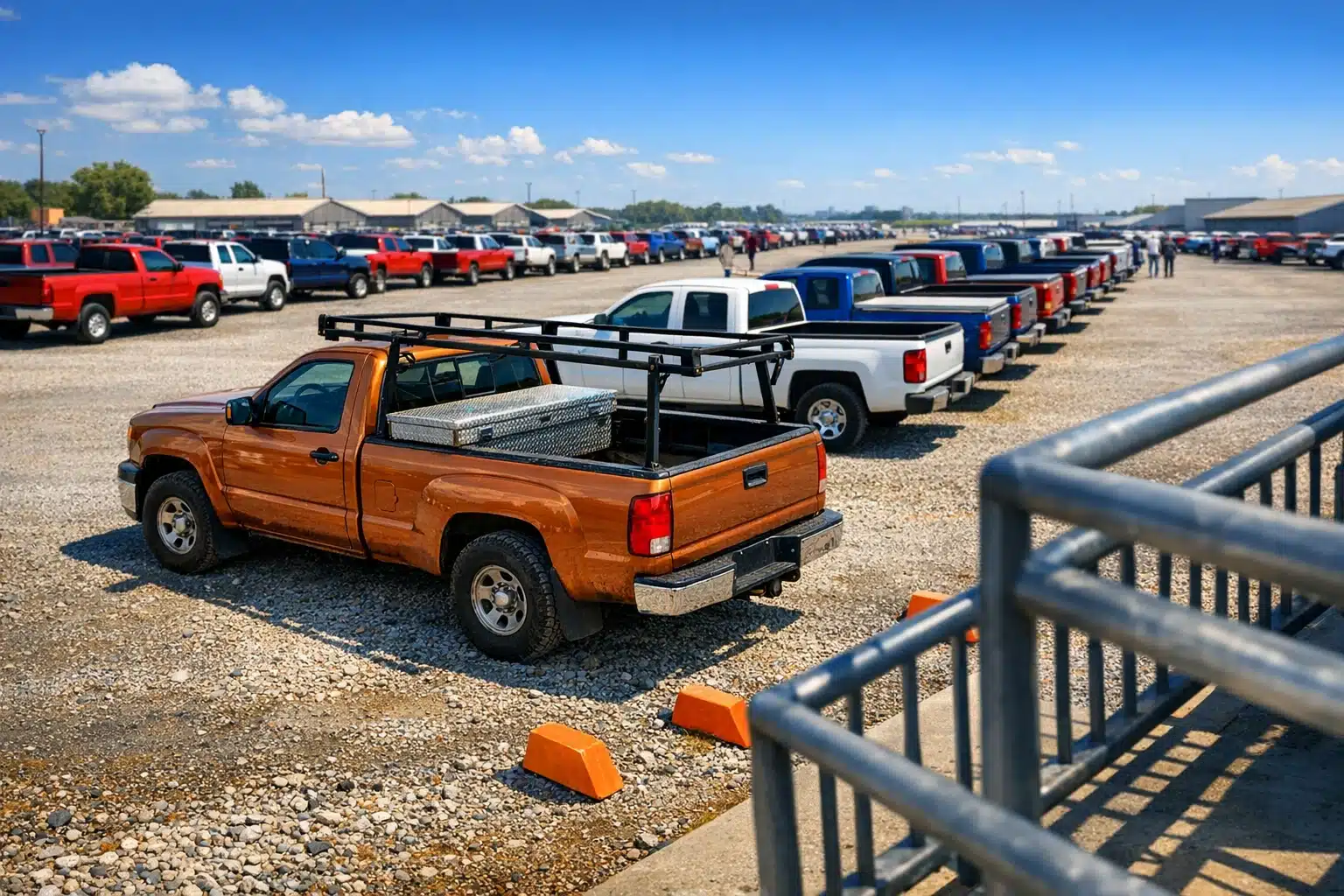
If an impounded pickup is not reclaimed within the required period, it may eventually be sold through a lien sale, government surplus process, or public impound auction. This creates two very different audiences around the same truck. One audience is the former owner who wants a last chance to recover it. The other is the prospective buyer who sees a work truck, project truck, or bargain hiding behind faded paint and a lot number. Both groups need clear expectations.
For buyers, impound auctions can be appealing because prices may start below typical retail values. A used pickup sold through a dealer lot is usually cleaned, inspected to some degree, and presented with paperwork already organized. An impound truck is different. It is often sold as-is, where-is, with limited guarantees and sometimes very little time for inspection. Some yards permit only visual checks. Others may allow brief engine starts, while many do not. Keys may be missing, batteries dead, tires flat, and service history nonexistent. A truck that looks rugged can still hide transmission trouble, flood damage, title issues, or electrical problems beneath the surface.
Buyers should inspect for the kinds of clues that matter most:
• signs of hard commercial use, such as worn bed rails, hitch damage, or overloaded suspension
• rust around frame sections, cab corners, and brake lines
• warning lights, fluid leaks, mismatched tires, or missing catalytic converters
• incomplete paperwork or unclear title status
• expensive modifications that may not be legal or properly installed
For former owners, the lesson is less about bargain hunting and more about timing. Once auction steps begin, the process becomes much harder to reverse. Notices may include deadlines to request a hearing, settle charges, or prove ownership before the sale is finalized. If the truck is financed, the lender may step in, pay charges, and add costs to the loan balance. If the truck is essential for business, the downtime alone may be more expensive than the tow bill.
So what should the target audience remember? If you own a pickup, keep registration, insurance, and contact details current, and know where your title or finance paperwork can be found. If your truck is impounded, verify the hold, ask for exact release requirements, and move quickly before costs stack up. If you are bidding at auction, assume risk first and bargain second. In the end, police impound pickup trucks sit at the crossroads of law, logistics, and money, and the people who do best are the ones who treat the situation like a checklist instead of a mystery.