 Artificially generated image
 Mini Inground Pools: Design Ideas, Costs, and Installation Tips
A mini inground pool can turn a modest backyard into a place for cooling off, quiet exercise, and easy entertaining without letting water dominate the whole property. Demand for these compact pools keeps rising as homeowners look for designs that feel custom, practical, and easier to manage than a large traditional build. This article explains the main choices behind size, style, cost, and installation. Read on if you want a pool that suits both the land you own and the way you actually live.
Outline
-
What mini inground pools are, how they differ from larger pools, and who benefits most from them.
-
Design ideas that help a compact pool look intentional, comfortable, and visually balanced in a smaller yard.
-
Typical cost ranges, major budget drivers, and long-term ownership expenses.
-
The installation process, from permits and excavation to final startup and practical site considerations.
-
Maintenance needs, ideal buyer profiles, and a final summary for homeowners deciding whether to build.
1. Understanding Mini Inground Pools and Why They Appeal to Modern Homeowners
Mini inground pools are exactly what the name suggests: permanent pools installed below grade, but built on a more compact scale than a traditional backyard pool. In many residential projects, they range from roughly 10 to 20 feet in length and around 8 to 14 feet in width, though custom builds can stretch those numbers. Depth is often moderate rather than dramatic, because these pools are usually designed for lounging, cooling off, hydrotherapy, or casual play instead of diving. You may also hear related terms such as plunge pool, cocktail pool, spool, or compact lap pool. Each label points to a slightly different use, yet they all reflect the same idea: less footprint, more focus.
The appeal is easy to understand. Many homeowners live on smaller lots, especially in urban and close-set suburban neighborhoods where every square foot matters. A full-size pool can overwhelm the yard, limit seating areas, and add major operating costs. A mini pool offers a middle path. It can provide the visual pleasure and personal comfort of a built-in pool while leaving room for a patio, outdoor kitchen, fire pit, or a patch of lawn. That balance is a major reason these pools have gained attention in recent years.
Compared with a standard inground pool, a smaller design often uses less water, fewer chemicals, and less energy for circulation and heating. Heating can be especially efficient because a lower water volume warms faster. That does not mean ownership becomes effortless, but it often feels more manageable. Compared with an above-ground pool, a mini inground pool usually delivers a more integrated, architectural look and can support higher-end finishes such as tile, natural stone coping, built-in benches, tanning ledges, and concealed lighting.
-
Good for compact yards and courtyard-style homes
-
Suitable for couples, small families, and homeowners focused on relaxation
-
Can support resistance jets for exercise in limited space
-
Usually not the best choice for large pool parties or competitive swimming
In practical terms, the mini pool is less about doing everything and more about doing a few things very well. It creates a calm place to unwind after work, a conversation piece during a summer gathering, and a design element that can make a backyard feel finished rather than crowded. For many households, that is not a compromise at all. It is a better match.
2. Design Ideas for Small Yards: Making a Compact Pool Feel Spacious and Intentional
The best mini inground pools succeed because they are planned as part of the landscape, not dropped into it as an afterthought. In a small yard, design decisions carry extra weight. Shape, decking, plant placement, privacy screening, and the line of sight from the house all influence whether the space feels calm and open or tight and fragmented. A well-designed mini pool often behaves like an outdoor room. It gives the yard a center of gravity, and the surrounding elements work like furniture, walls, and lighting in a carefully arranged interior.
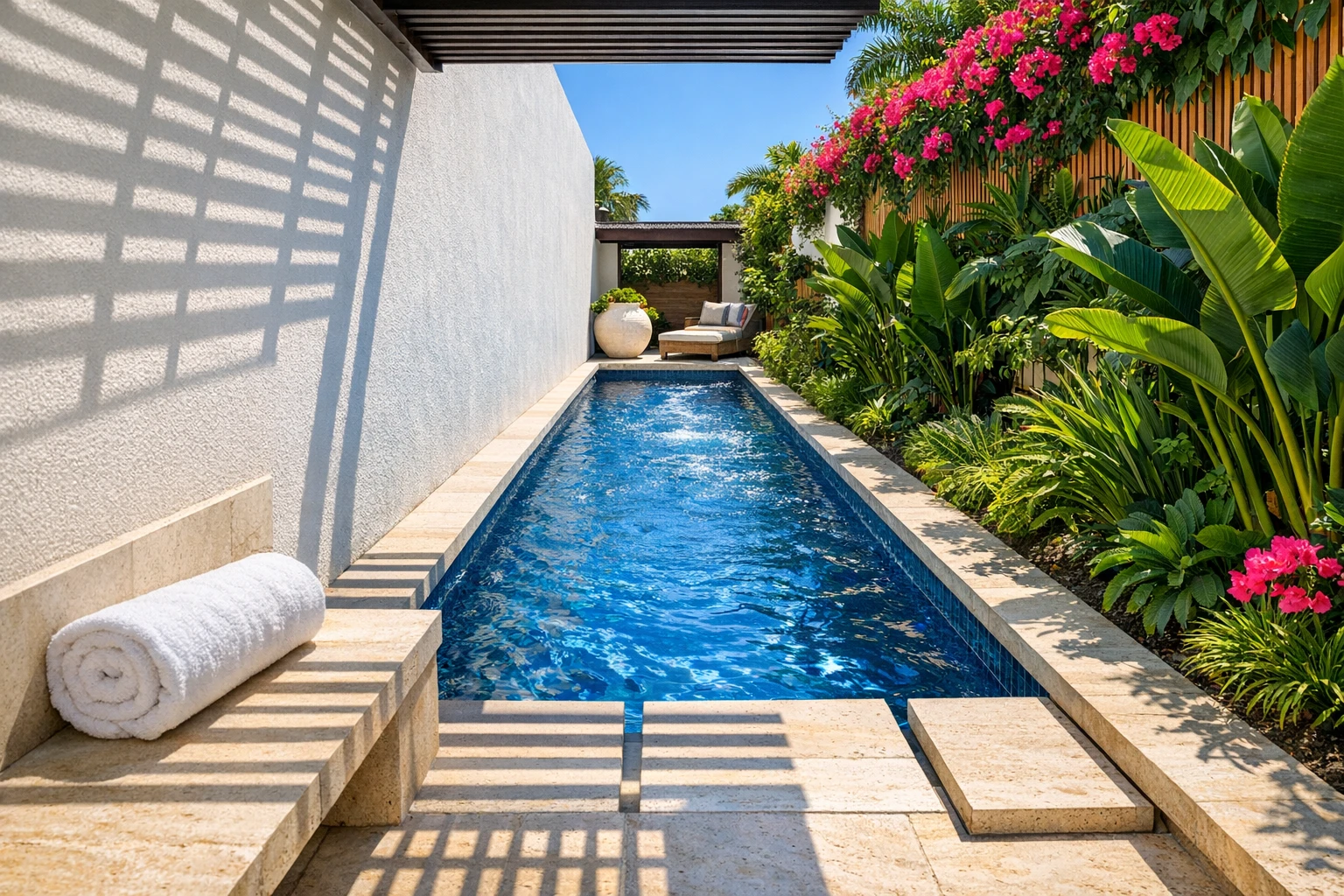
A rectangle is the most common shape because it is efficient, easy to furnish around, and fits modern homes beautifully. Clean edges also simplify automatic covers and coping installation. That said, other layouts can work well. A narrow plunge pool may be ideal for a side yard. A small square or cocktail pool can anchor a patio-centered entertaining area. A long, slim pool with resistance jets can serve homeowners who want exercise without the footprint of a true lap pool.
-
A modern rectangle with large-format pavers creates a crisp, resort-like look.
-
A plunge pool with a full-width bench supports conversation, soaking, and hydrotherapy.
-
A spool combines spa-style comfort with a cooler pool environment for warm weather.
-
A courtyard pool with vertical landscaping adds privacy and makes the water feature feel enclosed in a pleasant way.
-
A dark interior finish can produce a reflective, dramatic surface, while a lighter finish makes the water read bright and airy.
Smart detailing matters just as much as shape. Built-in benches reduce the need for floating furniture and increase comfort. Wide entry steps can double as shallow seating. A tanning ledge, if space allows, gives the pool a luxury feel without requiring much additional length. Lighting deserves attention too. Underwater LEDs, step lights, and warm perimeter lighting can make a small pool feel inviting at night, when reflections turn even a simple yard into something quietly cinematic.
Materials should support both safety and style. Non-slip decking is essential, especially around compact pools where people enter and exit from a concentrated area. Natural stone, textured concrete, porcelain pavers, and composite decking each bring different maintenance and aesthetic trade-offs. Privacy can be handled with layered solutions such as fencing, hedges, slatted screens, or raised planters. The goal is not to hide the pool completely, but to create a sense of retreat.
When space is tight, restraint often wins. Fewer features, chosen carefully, usually look better than a long wish list squeezed into too little area. The most successful mini pool designs know exactly what they are trying to be, and everything around them supports that one clear idea.
3. Costs, Budget Planning, and the Real Price of Ownership
Cost is often the question that decides whether a mini inground pool remains a dream or becomes a real project. The short answer is that a smaller pool usually costs less than a larger one, but not in perfect proportion to its size. Excavation, permits, plumbing, electrical work, decking, and equipment still have to be installed, so many core expenses remain. In other words, reducing the pool footprint cuts some costs, yet it does not eliminate the infrastructure that makes the pool function.
In many U.S. markets, broad starting ranges look something like this: a smaller vinyl-lined or kit-based installation may land around 20,000 to 40,000 dollars, a fiberglass mini pool often falls in the 30,000 to 55,000 dollar range, and a custom concrete build may begin around 45,000 dollars and rise well beyond 80,000 dollars depending on site conditions and finish level. Premium urban projects, difficult access, luxury tile work, engineered retaining walls, or integrated spa features can push totals much higher. These are not universal prices, but they are useful planning benchmarks.
Several factors have an outsized effect on the final number:
-
Material choice: concrete offers the most design freedom, while fiberglass can shorten construction time.
-
Access to the yard: narrow gates, sloped lots, and crane requirements increase labor and logistics costs.
-
Equipment package: heaters, automation, salt systems, variable-speed pumps, and swim jets all add to the budget.
-
Surrounding hardscape: decking, drainage, fencing, and retaining structures often cost more than homeowners expect.
-
Finish level: coping, tile bands, lighting, water features, and custom covers can change the project from basic to premium very quickly.
Operating costs are usually lower than those of a full-size pool because there is less water to heat, circulate, and chemically balance. Still, smaller does not mean free. Owners should plan for electricity, water top-offs, seasonal opening and closing in colder regions, routine cleaning, test chemicals or salt cell maintenance, and occasional equipment replacement. Heaters can noticeably increase utility bills, especially if the pool is kept warm over a long season.
As for value, a mini pool may improve enjoyment of the home more reliably than it guarantees a specific resale premium. Buyer preferences vary by climate, neighborhood, and property type. In some markets, a thoughtfully designed compact pool can make a property feel more finished and desirable. In others, buyers may view any pool as a maintenance commitment. The safest approach is to treat a mini pool first as a lifestyle investment. Build it because it fits how you want to live, then make cost decisions that keep the long-term ownership experience comfortable rather than stretched.
4. Installation Steps, Site Challenges, and Tips That Prevent Expensive Surprises
Installing a mini inground pool may sound simpler than building a large one, but the sequence still demands planning, permits, and technical coordination. The process generally starts with design and feasibility. A contractor or designer evaluates setbacks, zoning rules, utility lines, drainage patterns, soil conditions, access routes, and the location of existing structures. This early stage matters more than many homeowners realize. A pool that looks perfect on paper can become complicated if the yard has poor access, a steep grade, unstable soil, or underground obstacles.
Once design and approvals are in place, the site is marked and excavation begins. From there, the sequence depends on the pool type. Fiberglass shells are manufactured off-site and lowered into the excavation, which can reduce on-site construction time if access allows delivery. Concrete pools are built in place and involve steel reinforcement, plumbing rough-ins, shell application, curing, and interior finishing. Vinyl-lined systems fall somewhere in between, depending on the structure and kit. After the shell is set or formed, crews install equipment such as pumps, filters, heaters, sanitizing systems, lights, and automation components. Decking, coping, fencing, drainage, and final landscaping follow.
Timeframes vary. A fiberglass mini pool may move through active construction in a few weeks once permits are secured, while a concrete project often takes longer, sometimes six to twelve weeks or more depending on weather, inspections, and finish complexity. Permitting itself can add additional weeks before the first shovel hits the ground.
-
Ask about access width before signing a contract, especially for fiberglass delivery or excavation machinery.
-
Confirm who handles permits, inspections, and utility locates.
-
Do not overlook drainage; runoff around a pool can damage decking and create long-term structural issues.
-
Budget for fencing, gates, alarms, and code-required safety features early instead of treating them as add-ons.
-
Review equipment placement carefully so pumps and heaters are accessible for service but not disruptive near seating areas.
One of the most valuable installation tips is to think beyond the shell. The pool itself is only part of the project. The quality of drainage, the comfort of the deck, the position of steps, the privacy of the seating area, and the ease of maintenance access all shape whether the finished space feels effortless or frustrating. A compact yard leaves less room for correction later, so precision during planning pays off. When the layout is right, the construction phase becomes more predictable, and the finished pool feels as though it always belonged there.
5. Conclusion: Is a Mini Inground Pool the Right Choice for Your Home and Lifestyle?
For the right homeowner, a mini inground pool can be one of the most satisfying upgrades a backyard can receive. It suits people who want a private place to cool off, relax, entertain a few friends, or enjoy low-impact exercise without the scale and upkeep of a full-size pool. It is especially appealing for compact properties, design-focused renovations, second homes, downsized households, and anyone who values a polished outdoor living area more than a broad open lawn. If your vision of pool ownership involves quiet evenings, weekend lounging, and a yard that still has room for dining or gardening, the format makes a great deal of sense.
That said, a mini pool is not automatically the correct answer for everyone. Families who want space for energetic games, homeowners who host large gatherings often, or serious lap swimmers may find the compact dimensions limiting unless they invest in special features such as resistance jets. A smaller footprint also does not excuse rushed planning. Material choice, drainage, fencing, heating strategy, and equipment quality will still determine whether ownership feels smooth or irritating over time.
Maintenance remains part of the equation, even if the workload is lighter than with a larger pool. Owners should expect to stay consistent with the basics:
-
Test and balance water regularly.
-
Clean filters and remove debris before it builds up.
-
Monitor pumps, heaters, and sanitizing systems for performance changes.
-
Use a cover when practical to reduce heat loss and keep out leaves.
-
Plan for seasonal service if you live in a climate with freezing temperatures.
The most useful way to evaluate a mini inground pool is to ask a simple question: what do you actually want your backyard to do? If the answer includes relaxation, visual appeal, and daily usability in a modest space, a compact pool may be a remarkably efficient solution. It can deliver the atmosphere of a private retreat without asking your property to become a full-time resort. For homeowners who prefer thoughtful design over sheer scale, that is the real strength of the mini inground pool. It is not a lesser version of a big pool. It is a different kind of backyard luxury, shaped to fit real homes and real routines.