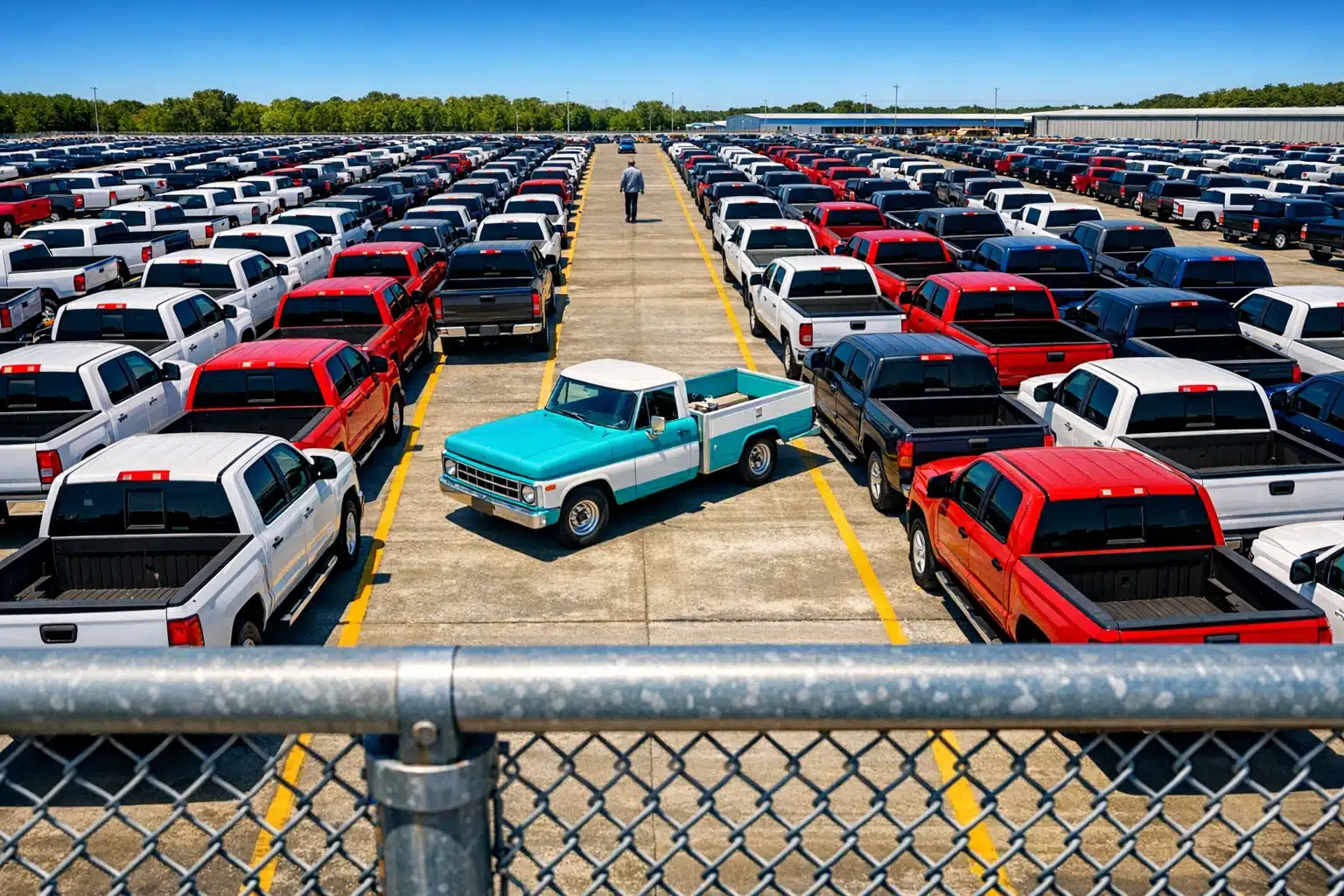
 Artificially generated image
 Police Impound Pickup Trucks: What Buyers Should Know
Used pickups are expensive enough that any listing with the words police impound can feel like a side door into a locked market. That sense of opportunity is exactly why these trucks attract first-time bidders, small contractors, hobby mechanics, and budget-minded drivers alike. Still, an impounded vehicle is not automatically a hidden gem, because storage conditions, skipped maintenance, title issues, and unknown downtime can change the math quickly. Understanding the system before you shop is what turns curiosity into a smart decision instead of a costly lesson.
Outline: How to Read the Police Impound Pickup Market
This article begins with a practical map of the subject, because police impound pickup trucks are often discussed as if they all come from one simple source. In reality, they do not. A truck may be impounded after an arrest, towed after being abandoned, seized during an investigation, held after repeated parking or registration violations, or stored because the owner failed to reclaim it after a tow. That range matters. A late-model half-ton truck from a fleet owner may have a very different story from an older work truck that sat behind a chain-link fence for months collecting dust, rainwater, and small mysteries under the hood.
The next part of the article explains how impounded pickups move from storage yards to public sale. Many buyers assume police departments directly sell every vehicle they tow, but the process is usually split between law enforcement, municipal contracts, tow companies, and auction services. Knowing that chain helps you understand why records vary and why one listing may show detailed photos while another gives you only a unit number, a grainy side view, and a short note that says as is.
From there, the article compares impound trucks with more familiar used-truck sources such as dealer lots, trade-ins, fleet sales, and bank repossessions. That comparison is essential, because a lower hammer price does not always mean a lower final cost. Fees, transport, repairs, missing keys, dead batteries, and title delays can quietly turn a bargain into a budget problem. On the other hand, buyers who can inspect carefully and stay disciplined sometimes find strong value, especially on basic two-wheel-drive work pickups that scare off image-focused shoppers.
The fourth section shifts into method. It covers inspection habits, paperwork questions, auction strategy, and warning signs that deserve immediate attention. Think of it as the flashlight-and-clipboard portion of the guide. Finally, the conclusion speaks directly to the most likely audience: practical buyers who need a truck for work, light hauling, home projects, or a second vehicle, and who want to decide whether a police impound option suits their risk tolerance, time, and mechanical confidence.
Where Police Impound Pickup Trucks Come From and How They Reach Buyers
Police impound pickup trucks enter the market through several paths, and understanding those paths is one of the most useful things a buyer can do. The word impound sounds dramatic, but the backstory is often ordinary. A truck may be towed after a traffic stop when the driver has no valid license. It may be held after an accident when no one is available to claim it. It may sit in a tow yard because the owner cannot or does not want to pay storage and release fees. Municipal systems also handle abandoned vehicles, lien sales, and certain seized vehicles. By the time the truck appears on a public list, the legal issue that caused the tow may have little connection to the mechanical condition of the vehicle itself.
That said, the origin still matters because it affects paperwork, inspection access, and risk. A truck that was simply unclaimed after a tow may carry fewer complications than one involved in a court process. Some vehicles are released for sale only after deadlines expire and notice requirements are met. In many areas, the public sale is not conducted by officers standing around a yard with clipboards. Instead, a contracted auction company or tow operator manages the listing, bidding, payment rules, and pickup windows. This is why buyers often see terms such as lien sale, abandoned vehicle sale, municipal auction, or online impound auction rather than a direct statement that the police department is selling the truck.
For pickup shoppers, this process creates a mixed inventory. Common examples include older Ford F-150, Chevrolet Silverado, GMC Sierra, Ram 1500, Nissan Frontier, and Toyota Tacoma models, plus heavier work trucks from commercial fleets. Many are basic trims with vinyl floors, steel wheels, towing equipment, ladder racks, or signs of jobsite use. That can be good news if you value utility over cosmetics. A plain truck with scratches, faded paint, and a dented bed side may look rough while still serving as a useful hauler.
However, there are reasons impound trucks can be mechanically uncertain. They may have sat for extended periods without being started. Tires can flat-spot, batteries die, rodents move in, and moisture finds its way into places it should not. Sometimes personal items have been removed, but service records are gone too. In short, the route from roadside tow to public auction is not a smooth showroom journey. It is more like a long layover in a harsh parking lot, and buyers need to think accordingly.
Price Advantage Versus Real-World Risk: Comparing Impound Pickups With Other Used Trucks
The main reason people search for police impound pickup trucks is simple: price. Used pickups often hold value unusually well compared with many passenger cars because they serve so many roles at once. They tow trailers, carry tools, handle property maintenance, and fit both personal and business use. In a tight used market, that versatility keeps demand high. Against that backdrop, an impound auction can look like one of the few places where a buyer might sidestep dealer markup and emotional retail pricing. Sometimes that is true. A truck with dirty paint, no detailing, and poor listing photos can sell for less than an equivalent vehicle on a retail lot.
But the gap between cheap to buy and cheap to own is where many bidders learn the hard lesson. Dealer trucks are usually presented after cleaning, basic inspection, and at least some effort to make them saleable. Fleet sales often come with clearer maintenance histories. Bank repossessions may be newer and less weathered, though not always better cared for. Impound trucks, by contrast, are commonly sold as is, where is, with limited guarantees and limited access to test driving. A lower bid can therefore hide a stack of extra costs that appear the moment the auction closes.
Common ownership costs after an impound purchase include:
• buyer’s premium charged by the auction platform or auctioneer
• document, title, or gate fees
• towing or transport if the truck cannot be driven legally or safely
• replacement keys or programming for newer security systems
• battery, tire, brake, fluid, or ignition repairs after long storage
• emissions or registration work required before road use
Another point of comparison is psychology. Retail buyers often overpay because the truck is polished and parked under bright lights. Auction buyers can overpay for the opposite reason: the thrill of spotting a supposed hidden gem. A bid war over a rough four-wheel-drive pickup can erase the discount within minutes. The smarter way to compare values is to start with realistic local prices for a similar truck in roadworthy condition, then subtract conservative estimates for risk and repair. If the remaining number is still attractive, the truck may deserve attention. If not, the low opening bid is only theater.
In practical terms, impound pickups make the most sense when the buyer has one or more advantages. Those advantages may be mechanical skill, access to inexpensive repairs, flexible transport, patience with paperwork, or a willingness to buy a cosmetically tired truck for honest work. Without those advantages, the safer value may come from a conventional used-truck source, even at a higher sticker price.
Inspection, Paperwork, and Bidding Strategy Before You Commit
If you are seriously considering a police impound pickup truck, the most important habit is to treat every listing as incomplete until proven otherwise. Auction descriptions can be sparse by design. A truck might be described with year, make, model, VIN, and almost nothing else. That means your homework fills the gap. Start with the VIN if it is available and use it to review title status, prior registrations, and any accessible vehicle history records. A history report is not perfect, especially for older work trucks, but it can reveal major accident entries, salvage branding, odometer inconsistencies, or where the truck spent most of its life. A desert-state truck and a salt-belt truck may look similar in photos while being worlds apart underneath.
If the auction allows in-person preview, arrive with a plan rather than wandering row by row. Bring a flashlight, gloves, a tire gauge, a magnet if you know how to use one for crude body filler checks, and a small notebook. Look under the truck for frame rust, leaks, bent suspension parts, cracked leaf springs, and damage near hitch points. Open the bed and inspect it as if it were a jobsite diary written in metal. Deep gouges, drilled holes, welded brackets, or heavy fifth-wheel wear tell you how the truck earned its living. Inside the cabin, smell matters. A mildew odor can hint at water intrusion. Heavy smoke smell can be expensive to remove. A stripped interior may suggest rough use or parts swapping.
Paperwork deserves equal attention because a truck that cannot be titled smoothly is not a bargain. Ask what document comes with the sale. It may be a clean title, a lien-sale package, a salvage title, a rebuilt title, or another transfer document recognized in that state. Verify whether unpaid fees survive the sale. Confirm payment deadlines, acceptable payment methods, storage charges after the pickup window, and whether keys are included. Never assume a truck is road legal on the day you win it.
A sensible bidding routine looks like this:
• set a maximum all-in number before the auction starts
• include fees, transport, repairs, taxes, and registration in that number
• do not raise your cap because the truck seems close to yours
• skip any listing with missing documentation you cannot verify
• assume at least one unpleasant surprise and budget for it
There is a cinematic version of auction buying where instinct triumphs in the final seconds. Real value usually looks less glamorous. It looks like discipline, quiet math, and the willingness to walk away from a truck that made your pulse jump but not your spreadsheet work.
Conclusion: Who Should Buy an Impound Pickup and Who Should Pass
Police impound pickup trucks are not magic discounts on demand, and they are not traps by definition either. They sit in the broad middle ground where opportunity and uncertainty share the same parking space. For the right buyer, that can be productive territory. If you need a secondary work truck, a farm runabout, a tow rig project, or a basic hauler for property maintenance, an impound purchase may be worth exploring. Buyers with mechanical experience, access to affordable labor, and patience for paperwork usually stand the best chance of turning an auction purchase into useful transportation.
These trucks can also suit small business owners who care more about function than finish. A faded long-bed pickup with an honest frame, a sound drivetrain, and a plain interior may be more valuable to a contractor than a shinier truck with higher financing costs. In that sense, the best impound candidates are often the least glamorous ones. They are the trucks other bidders overlook because the paint is tired, the steel wheels are unfashionable, or the listing photos look as dreary as a Monday yard shift after rain.
On the other hand, some shoppers should be cautious or avoid this channel altogether. If you need reliable transportation immediately, lack a repair reserve, are unfamiliar with title procedures, or feel pressure to win something today, a police impound auction may be the wrong environment. The same goes for buyers who cannot inspect in person and do not have a trusted mechanic or transporter available. Convenience is rarely the selling point here. Risk management is.
For the target audience of this topic, the most useful takeaway is simple. Approach police impound pickup trucks as problem-solving purchases, not treasure hunts. Compare them honestly with dealer inventory, private-party sales, repossessions, and fleet disposals. Let condition, paperwork, and total cost guide the decision rather than auction excitement or the fantasy of a once-in-a-lifetime score. When you stay methodical, an impound truck can become a practical asset. When you chase it on hope alone, it can become the kind of story that starts with a bargain and ends with a trailer, a repair bill, and a lesson learned the expensive way.