 Artificially generated image
 Police Impound Trailers: What Buyers Should Know
Buying a police-impound trailer can look like an easy shortcut to a bargain, but the real story is more layered than an auction photo suggests. Titles may be delayed, damage can hide under a coat of dust, and fees can quietly swallow the savings of a low winning bid. For contractors, small businesses, campers, and side-hustle resellers, learning how these sales work before bidding can turn a gamble into a practical, informed purchase.
Article Outline
- How trailers end up in police or municipal impound inventories
- The real cost of purchase beyond the winning bid
- How to inspect condition, identify trailer type, and compare value
- What paperwork, title checks, and bidding rules deserve close attention
- Who should buy, who should pass, and how to make a sensible final decision
How Police-Impound Trailers Enter the Market
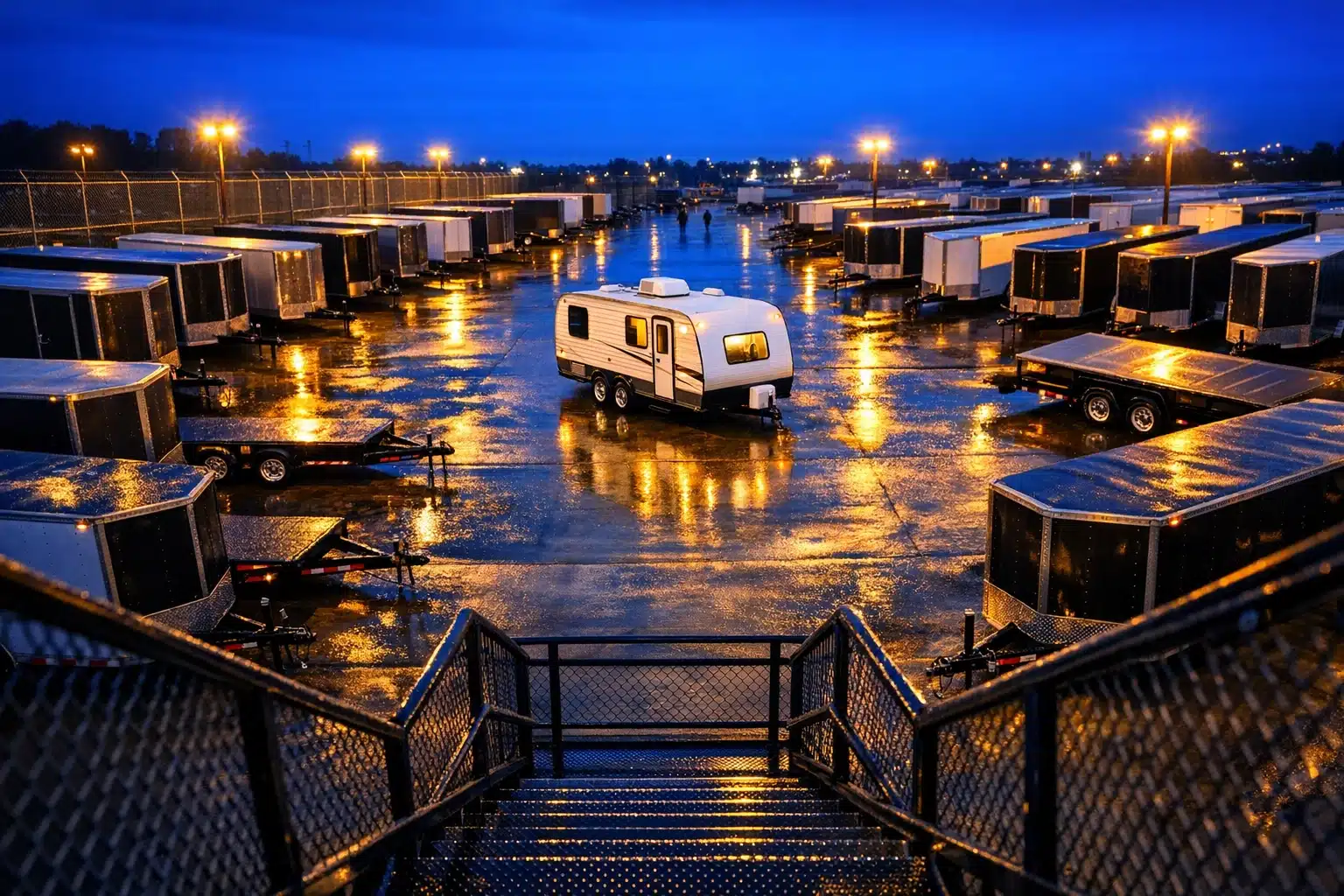
Not every trailer sold from an impound-related channel has the same backstory, and that distinction matters more than many first-time bidders realize. A trailer may be taken into custody because it was abandoned, left on private property, involved in a traffic stop, connected to unpaid towing and storage fees, or held while ownership is sorted out. In other cases, a municipality simply needs to clear space, and older units that were never reclaimed are sold at public auction. The result can look simple on the surface: a trailer with a number on the side and a date on the lot board. Underneath that surface, however, the story can be very different from one trailer to the next.
Buyers should also know that “police impound” is often used loosely in listings. Some sales are run directly by law enforcement agencies, some by city surplus departments, and others by towing companies acting under local rules after required notice periods have expired. That does not make the sale illegitimate, but it does mean the terms can vary sharply. One yard may provide a basic description, VIN, and title status, while another offers only a lot number and an as-is disclaimer.
Common reasons trailers enter these sales include:
- Abandonment on public roads or commercial property
- Unpaid towing, recovery, or storage charges
- Traffic or registration violations that led to impoundment
- Unclaimed property after notice to the prior owner or lienholder
- Municipal fleet disposal or evidence-release clearance
The timeline matters too. Some trailers sit for weeks, others for months. A long stay in a storage yard can be rough on tires, brakes, wiring, seals, and flooring. Sun fades finishes, moisture works its way into wood, and small cracks quietly become repair bills. A trailer that looked serviceable when it arrived may be much less appealing after one hard season outdoors.
Another point worth remembering is that these sales are usually final. Refunds are rare, warranties are practically nonexistent, and condition guarantees are minimal. That is why experienced buyers treat the event less like a retail purchase and more like a cold-eyed evaluation of risk. The bargain is possible, yes, but it is earned through attention, not optimism. In a yard full of metal frames and mystery histories, the best buyers are the ones who ask what happened before they ask how cheap it is.
The True Cost: Fees, Repairs, Transport, and Other Budget Surprises
The winning bid is only the headline number. The real cost of a police-impound trailer is often a bundle of smaller charges that arrive one after another, quietly building a total that looks very different from the auction screen. A buyer who celebrates a low bid too early can discover that the bargain was only the opening act.
Auction houses and impound agents commonly add buyer premiums, administrative fees, document charges, taxes where applicable, and strict payment deadlines. If the trailer is not removed within the stated window, storage may begin again, sometimes by the day. For larger enclosed units, equipment trailers, or campers, removal may require a heavy-duty tow vehicle, temporary tires, portable lights, or a flatbed. That means the trip home can cost more than the listing implied.
Typical cost areas to budget for include:
- Buyer premium, often a percentage of the final bid
- Sales tax, title transfer fees, and registration costs
- Towing or hauling from the yard to your location
- Replacement tires, wheels, bearings, lights, and safety chains
- Brake service, wiring repair, flooring replacement, or structural welding
- Locks, keys, ramps, jacks, batteries, or missing accessories
In many U.S. markets, towing can run from roughly $100 to several hundred dollars depending on distance and trailer size. Storage, when it applies, may add daily charges that turn delay into a penalty. Basic repairs also add up quickly. A set of trailer tires can cost far more than casual bidders expect, and if axle work, brake assemblies, or rotten deck boards are involved, the total can rise fast. What looked like a $1,200 deal may, after transport and repairs, become a $2,500 or $3,000 project.
This does not mean impound purchases are poor value. It means the smart comparison is never bid price versus retail sticker alone. The better formula is this: all-in cost versus realistic market value after repairs. Buyers who use that lens are far less likely to overpay.
There is also the cost of uncertainty. If you are buying for business use, downtime matters. A contractor who needs a working utility trailer next week may lose more money chasing repairs than by buying a ready-to-use unit from a private seller. On the other hand, a patient buyer with tools, mechanical knowledge, and storage space may turn a rough impound purchase into a genuinely economical asset. The same trailer can be a mistake for one person and a smart move for another. Budgeting honestly is what reveals which is true.
Inspecting the Trailer: Condition, Type, and Real-World Value
If auction photos are the movie trailer, an in-person inspection is the full plot. Buyers should approach police-impound trailers with the mindset of an evaluator, not a dreamer. A trailer can look rugged from ten feet away and still hide serious structural problems underneath. Rust, impact damage, poor repairs, and water intrusion do not always announce themselves with drama. Often they whisper.
Start with the frame. Look for bends, cracked welds, heavy corrosion, and signs of a hard side impact. A cosmetic dent in a fender is one thing; a twisted tongue or uneven axle alignment is another. Check whether the coupler latches securely, whether safety chains are intact, and whether the jack works properly. Then move to the running gear: tires, wheels, hubs, suspension, and brakes. Dry-rotted tires and seized bearings are common on trailers that have been parked for long periods.
The checklist should vary by trailer type. A basic utility trailer, an enclosed cargo trailer, a boat trailer, and a travel trailer each bring different risks:
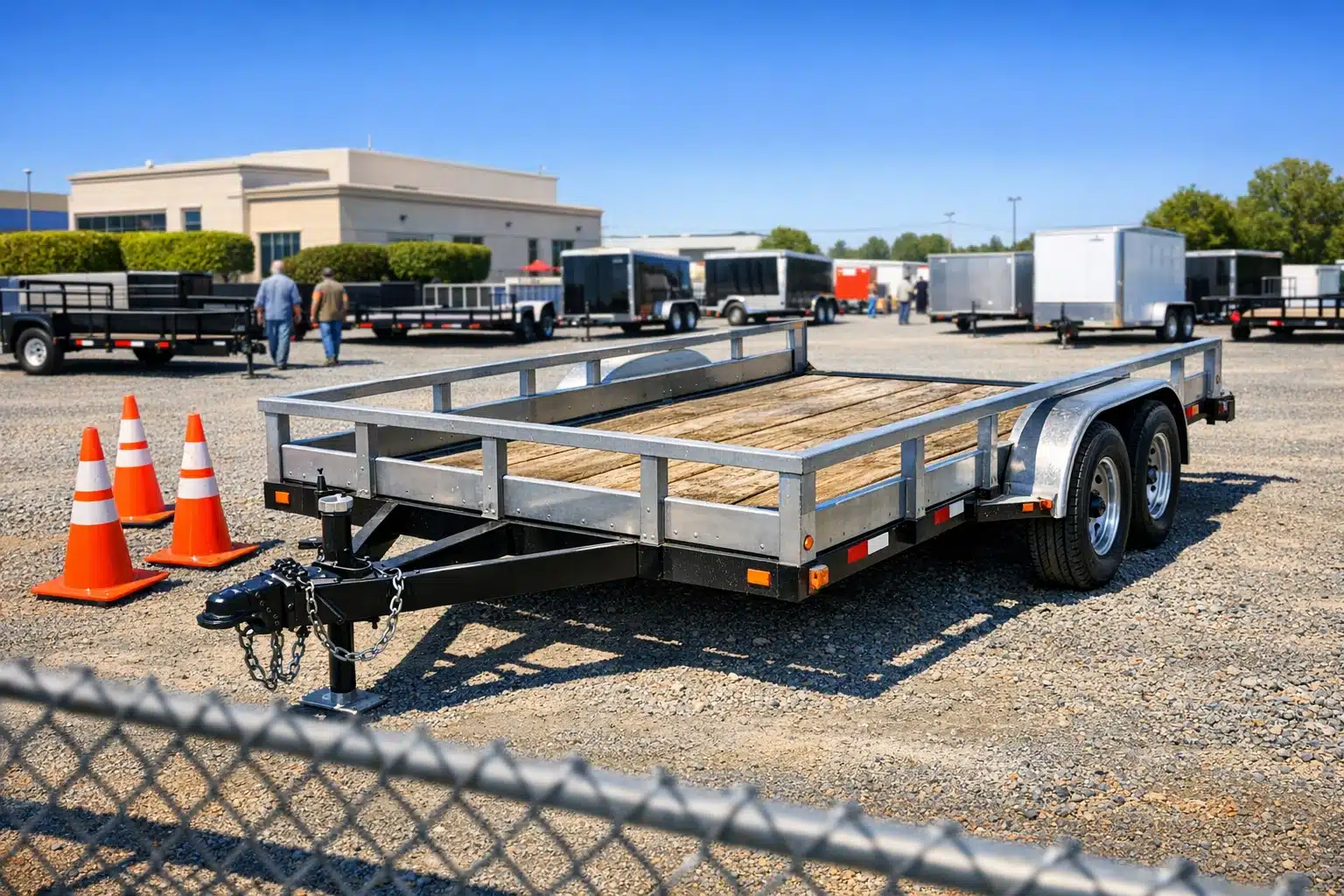
- Utility trailer: inspect deck boards, ramps, rail damage, tie-down points, and axle wear
- Enclosed cargo trailer: check roof seams, side panels, floor softness, rear door alignment, and lock hardware
- Boat trailer: inspect bunks, rollers, winch condition, corrosion from salt exposure, and light wiring
- Travel or camper trailer: look for water intrusion, mold odors, soft flooring, appliance condition, and roof damage
VIN identification deserves close attention. Make sure the VIN plate or stamped number is present and appears consistent with paperwork. Missing or altered identification can turn a promising purchase into a registration headache. Also verify the GVWR, dimensions, and axle rating if you plan to use the trailer for business loads or long-distance transport.
When valuing the trailer, compare it with similar local listings rather than idealized asking prices from high-end dealers. Focus on sold-condition logic: what would a buyer reasonably pay for this exact trailer after needed work? That mindset protects you from the “cheap because it must be worth more” trap. Sometimes the low bid reflects genuine hidden problems, not seller ignorance.
Bring a flashlight, gloves, a tire gauge, and a calm eye. If inspection is limited, review every photo carefully, zoom in on couplers, wheel wells, floors, VIN tags, and doors, and call the auction contact with specific questions. A buyer who inspects methodically often spots the difference between surface grime and serious neglect. In the impound world, that difference is where the money is saved.
Paperwork, Title Risks, and a Smarter Bidding Strategy
Paperwork is where many buyers either protect their investment or step into avoidable frustration. A trailer can be mechanically repairable and still be difficult to register if the title situation is unclear. Before bidding, find out whether the sale includes a clear title, salvage title, lien paperwork, bill of sale only, or some other transfer document accepted under local law. Trailer registration rules vary widely by state, and smaller trailers are sometimes treated differently from larger or heavier units. That makes assumptions expensive.
Ask practical questions before the auction closes:
- Is a title included, or only a bill of sale?
- Are there unpaid liens that must be resolved?
- Will the buyer receive release paperwork from the impounding authority?
- Does the state require a VIN inspection before registration?
- Is the trailer being sold for parts only, salvage, or road use?
These details matter because a registration delay can affect insurance, resale value, and legal road use. In some jurisdictions, replacing missing documents takes time, extra forms, inspections, and fees. If the trailer is intended for immediate commercial work, those delays can undermine the benefit of the low purchase price.
Now for strategy. A disciplined bidder sets a hard ceiling before the first click or paddle raise. The simplest formula is to estimate the fair local value of a similar working trailer, subtract expected repairs, subtract transport and fees, and then subtract a margin for uncertainty. That final number is your maximum bid, not a suggestion. Once bidding becomes emotional, people stop buying assets and start buying adrenaline.
A practical bidding approach looks like this:
- Research comparable trailers in your region
- Estimate repair costs conservatively, not optimistically
- Add all auction and transport charges
- Reserve extra budget for unknown defects
- Walk away the moment bidding crosses your cap
There is no trophy for winning the wrong trailer. In fact, experienced buyers often “lose” many auctions because they refuse to chase a number that no longer makes sense. That discipline is not timid; it is profitable. The best purchase is rarely the most exciting one. It is the one where the paperwork is clean, the condition is understandable, and the math still works after the dust settles. A smart bid is less about courage than clarity.
Conclusion: Who Should Buy a Police-Impound Trailer and Who Should Walk Away
Police-impound trailers can be worthwhile purchases, but they reward a specific kind of buyer. If you have mechanical knowledge, realistic expectations, a tow-capable vehicle, some repair budget, and patience for paperwork, these sales can produce useful equipment at a meaningful discount. That is especially true for buyers seeking straightforward units such as utility trailers, equipment haulers, or enclosed cargo trailers with visible, manageable issues. For someone comfortable with risk, a dusty yard can sometimes feel like a map full of hidden value.
They are less suitable for buyers who need immediate reliability, dislike uncertainty, or have no space to store and repair a project. If you need a trailer for next week’s job, a long camping trip, or time-sensitive deliveries, a conventional sale with a clearer history may be the better route. Saving money upfront does not help much if the trailer spends a month waiting on documents, parts, or brake work.
The main takeaways for the target audience are simple:
- Do not judge value by the bid alone
- Inspect condition with a checklist, not with hope
- Verify title status before committing money
- Budget for transport, fees, and repair overruns
- Set a maximum bid and stick to it without exception
For contractors and small business owners, the ideal impound purchase is a trailer that can be restored to dependable service without disrupting operations. For hobbyists and resellers, the opportunity is often in buying below market value while accurately pricing the work ahead. For casual buyers, the safest path may be to observe a few auctions first before participating.
In the end, buying a police-impound trailer is not about chasing the cheapest number on the screen. It is about understanding condition, legality, usability, and total ownership cost. When those pieces line up, the purchase can be practical and rewarding. When they do not, the smartest move is surprisingly simple: close the tab, lower the paddle, and wait for the next trailer. There will always be another auction, but your budget only has to lose once to teach a very expensive lesson.